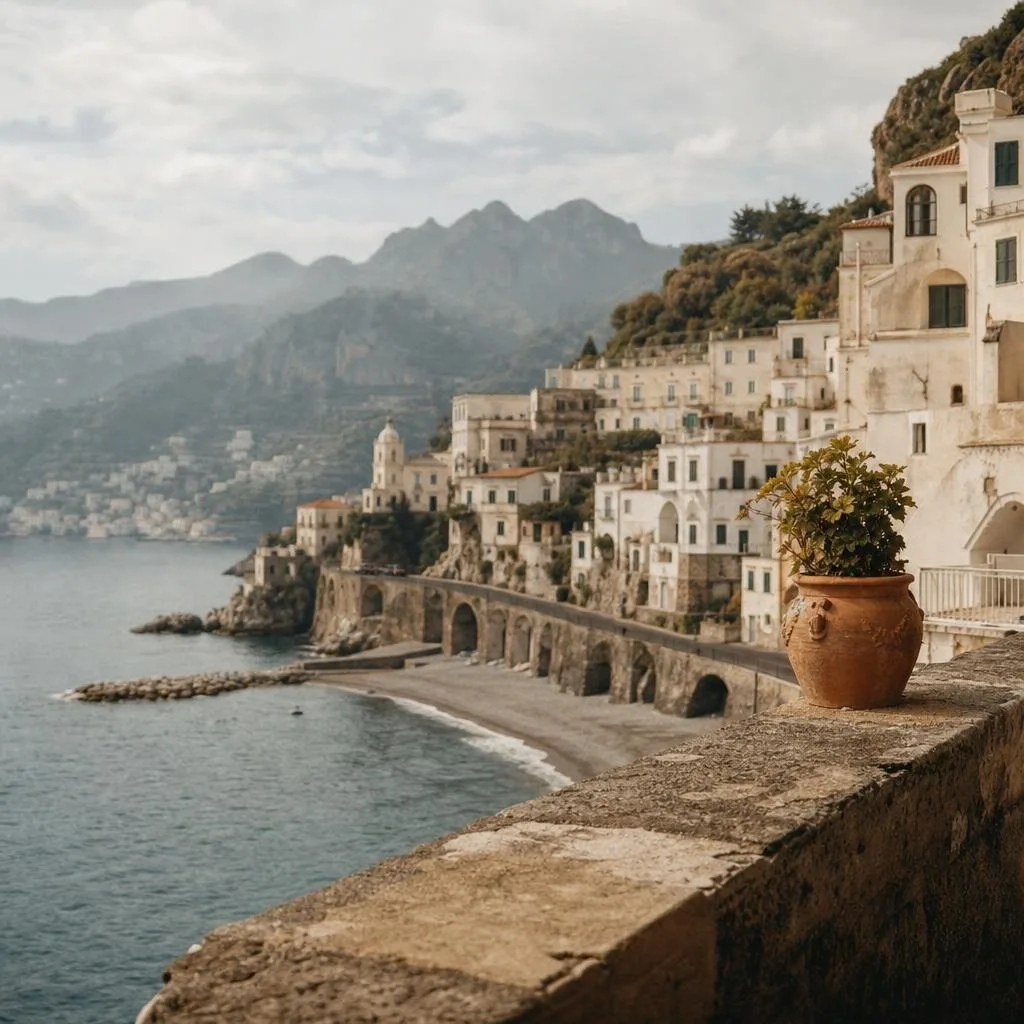
Before Venice, before Genoa, a cliffside town on the Italian coast built one of the Mediterranean's first maritime empires.
Today the Amalfi Coast is a place people visit for lemons and long lunches. A thousand years ago it was a naval power. In the tenth and eleventh centuries the Republic of Amalfi ran fleets and trading houses from Constantinople to Cairo, dealing in silk, spices, and the gold coins that its merchants trusted more than any minted in Christendom.
Amalfi's strength was born of its weakness. Hemmed in by mountains, with almost no farmland, the town had nothing to sell but its seamanship — so it sold that. Its sailors are credited with popularising the magnetic compass in the Mediterranean, and its merchant law, the Tavole Amalfitane, governed shipping disputes across the region for centuries after the city itself had faded.
That fading was sudden. In 1073 the Normans took the town; in 1343 a great storm and the collapse of a section of coastline swept much of the lower city into the sea. What survives is a cathedral of striped stone, a cloister of pointed arches borrowed from the Arab world its traders knew so well, and archives scattered across the ports it once commanded.
Replace with your own sources — the chronicles, the trade records, and the archaeology of the drowned harbour.